
10 Practical Ways to Start Yoga and Meditation for Beginners
Feeling overwhelmed by an endless to-do list and constant mental noise? It might be time to pause and reset. Here’s our guide to easy yoga stretches and mindfulness meditation. You’ll learn how to clear mental clutter and recharge your energy—no Yoga studio membership or flexibility required.
By Admin | March 10, 2026 | 13 Mins Read
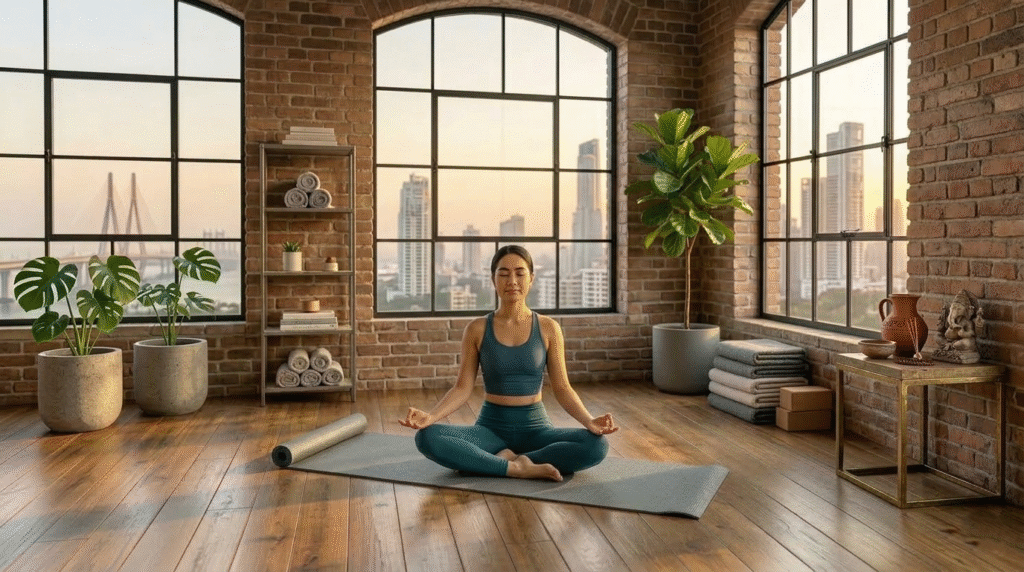
Ever felt like a computer with too many tabs open, with loud noise coming out of them, or a car stuck in traffic?. In our fast-paced world, engaged in a constant stream of notifications and back-to-back meetings, finding a moment of peace can feel like a luxury you can’t afford. But what if the “reset button” for your crazy lifestyle were already built in?. The answer is Yoga and meditation for beginners is the ultimate toolkit for regaining your peace and boosting your energy without joining a fancy yoga studio membership. Combining yoga for beginners with meditation for beginners, which, by the way, are two distinct concepts when worked together, can provide immense benefits.
We will explore the benefits of these practices, how you can start at home, some simple yoga poses for beginners, and a few beginner meditation techniques that anyone can practice.
By the end of this article, you will have a clear understanding of how to begin your daily yoga and meditation practice with confidence.
Disclaimer: This article is for educational and informational purposes only. The reader must consult an expert in any situation that needs professional help. It is highly recommended that pregnant individuals, senior citizens, or those who seek medical advice consult their medical expert or a professional to guide them.
Table of Contents
ToggleWhy combine yoga and meditation?
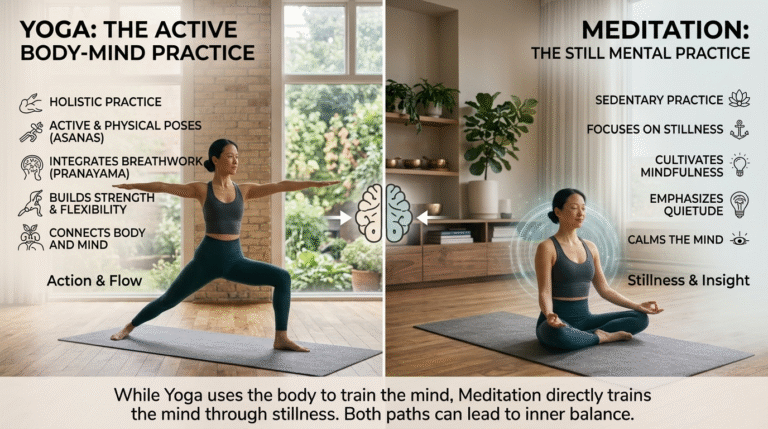
Combining yoga for beginners and meditation for beginners gives immediate benefits: better focus, less stress, improved sleep, and more body awareness. Yoga prepares your body and breath; meditation trains your mind. Together they build resilience and calm — perfect for modern, busy lives.
Benefits of Yoga and Meditation
Practicing yoga and meditation together helps improve both physical and mental health. These practices are widely recommended by wellness experts because they strengthen the connection between body and mind.
Here are some important yoga and meditation benefits for beginners:
- Reduces Stress and Anxiety
Starting yoga meditation for stress relief is observed to calm the nervous system and help the relax the mind. Slow breathing and mindful movement reduce tension in the body.
- Improves Flexibility and Strength
Consistent yoga for beginners gradually fosters flexibility and strengthens muscles without exerting too much excessive pressure on the body.
- Better Sleep Quality
Practicing yoga meditation for sleep before bedtime promotes relaxation in your body and quiets the racing mind, making it easier to fall asleep.
- Improves Focus and Mental Clarity
Mindfulness meditation for beginners trains your brain to stay present and improves concentration.
- Enhances Body Awareness
Yoga improves body awareness, helping you understand how your body moves and reacts during different activities.
10 Practical Ways to Start Yoga and Meditation for Beginners
Below are some of the suggested ways that you can begin with. simple and beginner-friendly guide.
1. Begin with the breath: Yoga breathing exercises for beginners
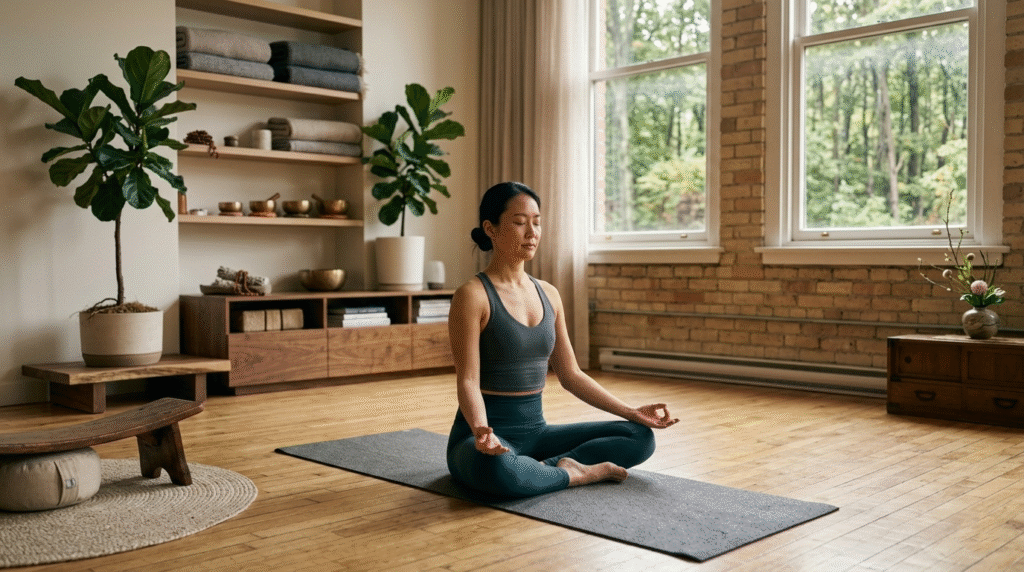
Start each session with 3–5 minutes of simple breathwork. Try box breathing: inhale 4, hold 4, exhale 4, hold 4. Or a calming variation: inhale 4, exhale 6. Longer exhales help reduce anxiety. This is a low-barrier beginner meditation technique you can use anywhere.
2. Set Up Yoga and Meditation at Home for Beginners
You don’t need a dedicated “Zen room.” You can practice yoga and meditation at home for beginners in a small corner of your bedroom or living room. Keep your mat unrolled, if you have space; it acts as a visual reminder.
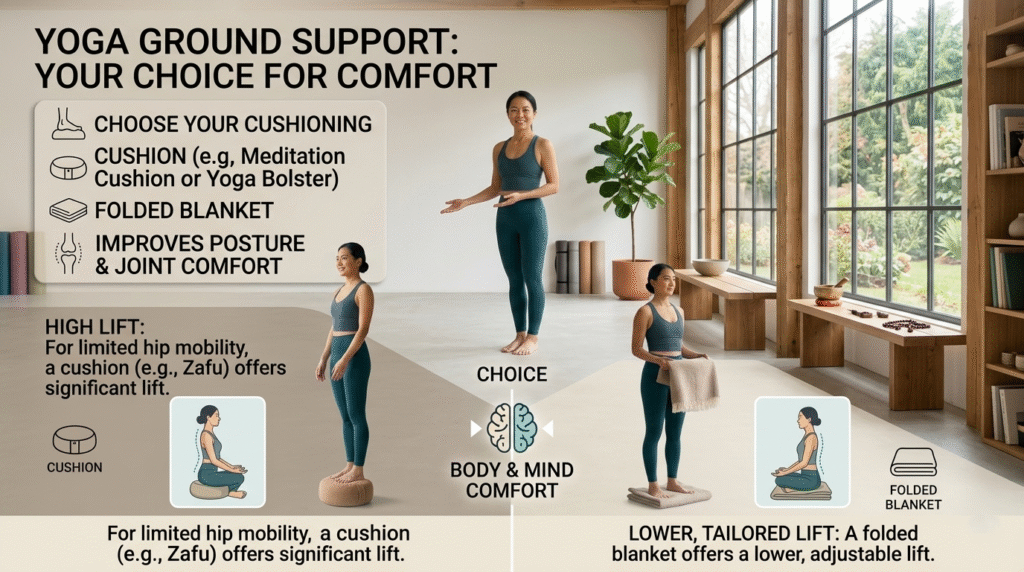
- Make sure the area is clutter-free.
- Wear loose breathable clothes to feel comfortable and easy.
- Use a cushion or a folded blanket to sit on during meditation to keep your back straight
3. Simple Yoga Poses for Beginners
Learn five essential poses: yoga poses for beginners
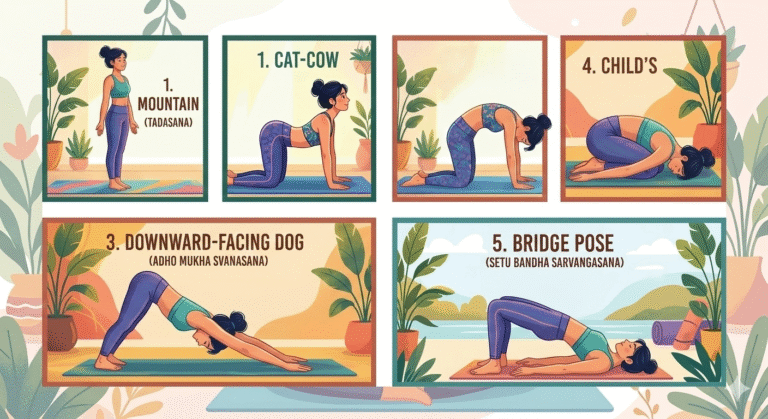
- Mountain Pose (Tadasana)
- Cat-Cow (Marjaryasana-Bitilasana)
- Downward-Facing Dog (Adho Mukha Svanasana)
- Child’s Pose (Balasana)
- Bridge Pose (Setu Bandha Sarvangasana)
Practice each pose for 30–60 seconds. These form a gentle beginner yoga routine that builds strength and mobility.
4. Modify and adapt: chair yoga for beginners and props
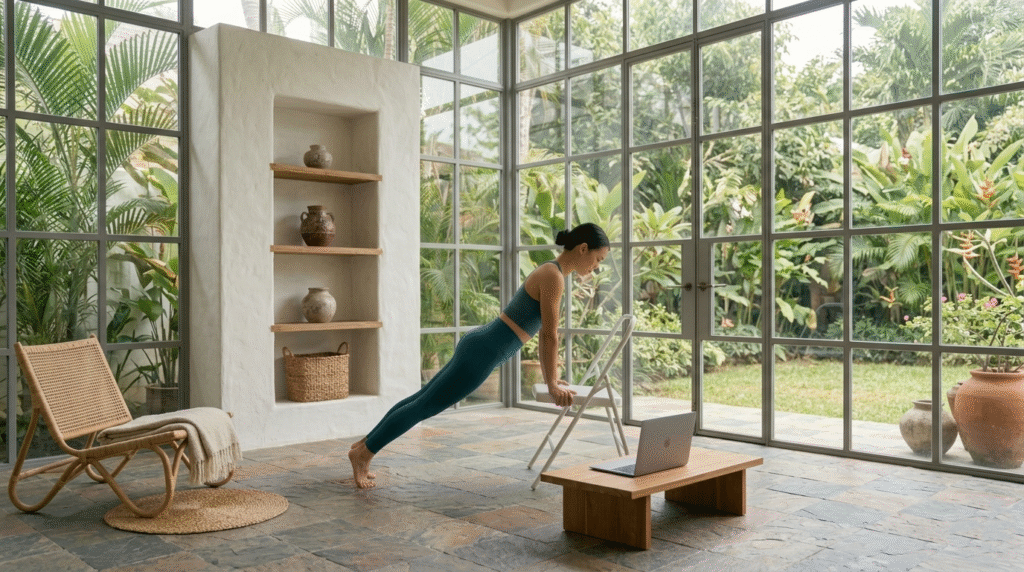
Don’t skip practice because of limited mobility. Chair yoga and simple props (blanket, bolster) make poses accessible. This is ideal for yoga for seniors beginners or office workers.
5. Pick an anchor time: morning yoga meditation for beginners or night
Morning sessions energize, evening sessions help you wind down.
Habit stacking works: after brushing your teeth, do 5 minutes of breathwork and 5 minutes of gentle stretching
6. Meditation Techniques for Beginners
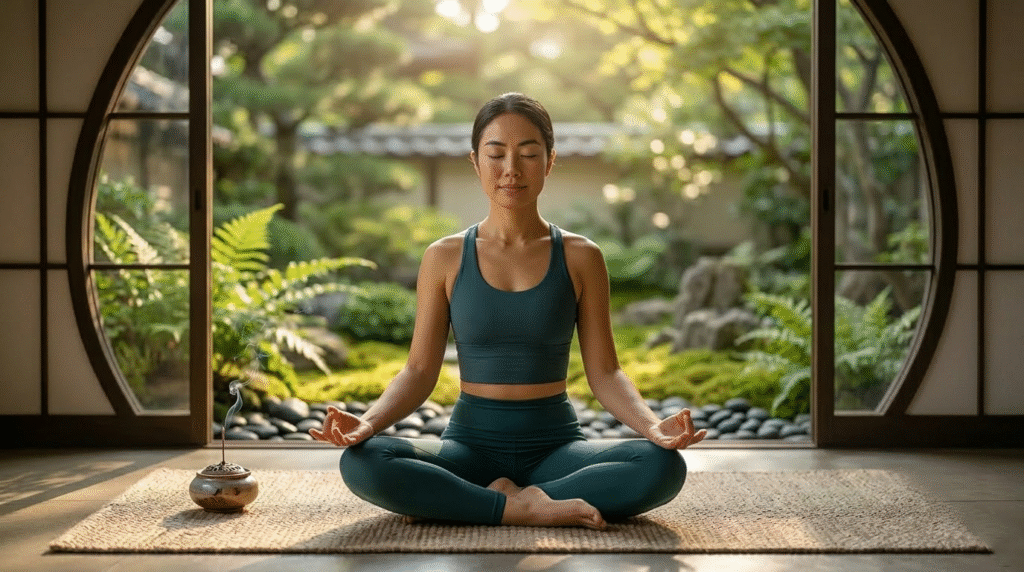
Meditation isn’t about “clearing your mind”—that’s almost impossible.
Instead, mindfulness meditation for beginners is about noticing your thoughts without judging them. Sit comfortably, close your eyes, and just notice the sounds around you. When your mind wanders to your grocery list or a work email, gently bring your focus back to the present. This simple beginner meditation technique helps you stay calm when life gets chaotic. First beginning months will be frustrating; it took me some time to be comfortable in that position, especially if the mind keeps wandering.
Example:
You notice sadness.
Instead of asking “Why am I sad?”, you silently acknowledge it: “Sadness is present.”
Then you return your attention to your breath.
Why this works:
Questioning can sometimes pull you deeper into thinking. Observation helps the mind settle and detach from emotions. And gain clarity.
7. Master Yoga Breathing Exercises for Beginners
Again, breathing in meditation?. Yes, your breath is your most powerful tool. Yoga breathing exercises for beginners, often called Pranayama, can change your mood in seconds. I started watching a lot of videos on YouTube, as a beginner, and there are ample of these videos available at your fingertips. I personally started with simple 10-minute Pranayama, and then went on to try stretching, and many other more. Try the “4-7-8” technique: breathe in for 4 seconds, hold for 7, and exhale slowly for 8. This is a core part of yoga meditation practice because it tells your brain it’s safe to relax. Using mindfulness breathing meditation for beginners is like giving your nervous system a gentle hug.
8. Use guided audio and apps: meditation for beginners made easier
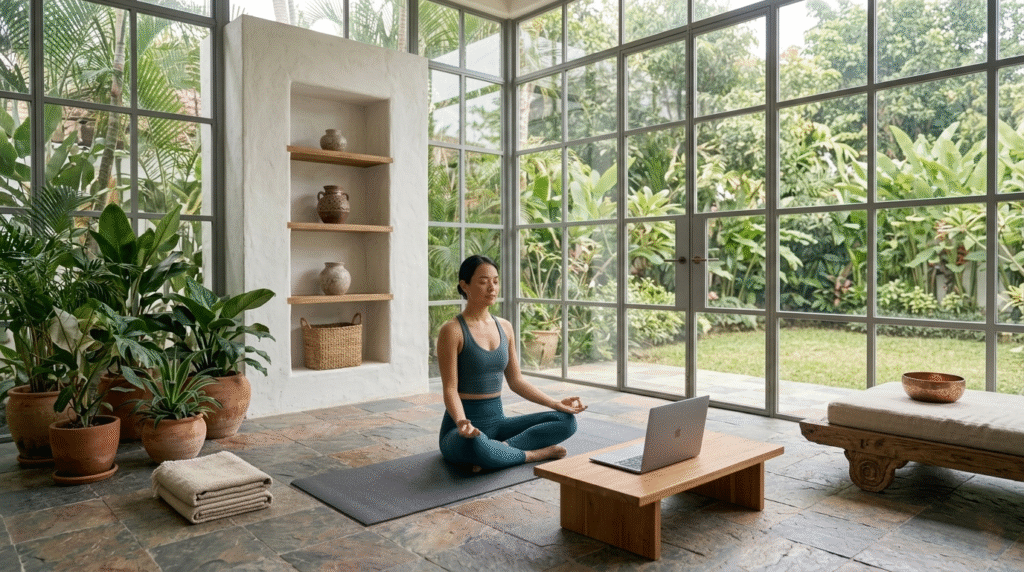
If your mind wanders, try a 5–10 minute guided meditation. Besides, on YouTube you’ll find many “sound of inner peace”, “Soothing relaxation” or “calm peaceful meditation”. I use it when I want to feel calm, and honestly, it works!!. Just try one video, let it play in the background, compose yourself in a position, and start observing your thoughts or emotions that arise.
9. Target Specific Needs:
Yoga and meditation aren’t just general health tools; they can help with specific problems.
Yoga meditation for sleep: Use slow, grounding poses before bed to quiet a racing mind.
Yoga meditation for anxiety: Focus on long exhales and “rooting” your feet into the ground to feel more secure.
Yoga and meditation for stress and anxiety: Combining movement with breath helps process the physical tension that anxiety creates in the body.
10. Track small wins: consistency over perfection
Keep a one-line log: date, minutes, and one-word feeling (calm, energized, tired). Aim for daily micro-practices (5–10 min). Consistency creates change.
Practical Tips & Safety
- Move with awareness: never force a pose. If you feel pain, ease out.
- Breathe through the movement; avoid breath-holding.
- For anxiety: emphasize longer exhales and grounding poses (Child’s Pose, Legs-Up).
- For sleep issues: try yoga meditation for sleep like yoga nidra or guided nighttime meditations.
- Pregnant or injured?: Seek a qualified instructor or medical advice before practising.
Final Tips: The "One-Breath Rule"
Whenever you feel overwhelmed at work, just take one conscious, deep breath. Notice the air entering your nose and leaving your mouth. This tiny act of mindfulness breathing meditation for beginners can instantly reset your focus.
Micro-practice: set a 60-second timer, close your eyes, and take three slow breaths with longer exhales. This quick reset is powerful during work breaks.
Conclusion
Starting a journey into yoga and meditation for beginners is one of the best gifts you can give yourself. We’ve covered how to start a beginner yoga routine, simple meditation techniques, and ways to use these tools for stress and sleep.
Remember, it’s not about being perfect; it’s about showing up for yourself. Why not start right now? Put your phone down, sit up straight, and take one deep breath. You’ve already begun. What is one small way you can move your body today to feel more peaceful?
FAQs
What is the difference between yoga and meditation?
Yoga is a body-based practice involving postures, breath, and movement; meditation is a mental practice that trains attention, awareness, and calm. Together they support mind-body health.
How long should a beginner meditate each day?
Start with 3–10 minutes. Even 5 minutes daily builds habit and benefits over time.
Do I need equipment to start?
No. A towel or mat and a cushion are helpful but not required. Yoga and meditation at home for beginners is very achievable with everyday items.
How often should I practice?
Aim for short daily sessions (5–20 minutes). Frequency beats duration when you’re starting out.
Can yoga and meditation reduce stress?
Yes. Regular practice reduces physiological stress markers and improves emotional regulation.
Is there a best time to practice?
Both morning and evening work — choose what you’ll stick with. Morning yoga meditation for beginners energizes; evening practices aid sleep.
What meditation technique is easiest for beginners?
Breath awareness and guided body-scans are great starting points. Try mindfulness breathing meditation for beginners.
Can beginners combine yoga and meditation in one routine?
Absolutely. Short flows followed by 3–10 minutes of sitting or lying meditation are ideal.
Can I do yoga if I’m not flexible?
Absolutely. Yoga for beginners is exactly where you learn to become more flexible over time.
Sahaja and Rajyoga Meditation for Beginners
If you want to dive deeper into different styles, you might look into Sahaja yoga meditation for beginners or Rajyoga meditation for beginners. These traditions focus on internal energy and mental discipline. While they have deep roots, they offer practical tools for modern life, helping you find a sense of “self-realization” and mental clarity.